
Best Places to Buy HRT Patches Online in 2026

Registered Nurse | Medical Writer & Patient Education Specialist
Stephanie Wright, RN, is a registered nurse with extensive clinical experience. Her background includes patient education and health communication. She develops and edits evidence-based healthcare content for consumer audiences.
Compare telehealth providers offering estrogen patches online, including pricing, insurance options, and availability during the current shortage.
Hormone changes can really impact your day-to-day life. For so many women, menopause symptoms such as hot flashes and mood changes can feel so disruptive that they start to look into more treatment options.
Hormone replacement therapy (HRT) is an effective way to manage menopause symptoms (1). Specifically, estradiol patches are often recommended (2). The patches deliver estrogen through the skin rather than through the digestive system. By doing so, it allows the body to receive a more stable level of hormones. But they also carry a lower risk of blood clots than oral estrogen (3).
What we’re seeing in 2026 is that access has become part of the challenge.
There is currently a nationwide shortage of estradiol patches (4). In fact, many pharmacies may have limited supplies, leading patients to learn that prescriptions are delayed or even unavailable. As a result, many more people are searching for ways to buy HRT patches online, especially through telehealth providers that can help navigate availability and conveniently shift medications directly to their homes.
Online hormone therapy programs are more than just convenient. They also help coordinate in-person visits. Patients can complete consultations remotely with a trusted provider and, in some cases, receive medication shipped to their house quickly.
We checked out several telehealth platforms that prescribed estrogen patches online to see how they compare. Here we look at cost, clinical oversight, insurance acceptance and reliability during ongoing supply issues.
These patches are FDA-approved medications evaluated for safety, quality, and effectiveness. Compounded hormone providers are not regulated in the same way.
TLDR: Best HRT Patch Providers in 2026
- Best overall, delivered to your door: Musely
- Best for insurance: Midi Health
- Best for FDA-approved patch: Winona
- Best direct delivery: Alloy
- Best for full menopause care: Midi Health
- Fastest prescription: Wisp
- Best ongoing support: Evernow
- Best for reliable auto-refills: Pandia Health
- Best budget-friendly option: Hello Alpha
Medical Disclaimer
This article is for informational purposes only and does not constitute medical advice. Hormone replacement therapy requires a prescription and clinical evaluation. Women with an intact uterus typically require progesterone alongside estrogen therapy. HRT is not appropriate for everyone and carries risks that should be discussed with a qualified healthcare provider.
At-A-Glance: Key Takeaways
For those of you who want a quick overview before diving into the full reviews, a few patterns stand out the most across the current HRT patch market:
- Estradiol patches are often covered by insurance. But not all telehealth providers accept insurance.
- The platforms typically charge between $20 and $150 per month, depending on the medication and dosing.
- Some of the providers ship medications directly, which can improve access during shortages.
- A few providers do not offer progesterone, which is required if you’re a person who still has their uterus.
- The clinical oversight offered varies: some providers require labs, while others use symptom-based prescribing only.
How We Chose the Best Providers
Choosing the best telehealth provider for HRT patches goes beyond cost. Since estradiol patches are harder to find, access and reliability are also key.
Our research included reviewing provider websites, pricing pages, and patient feedback. We also looked into prescribing practices and medication delivery. Several factors shape how each provider is evaluated.
Cost and Pricing Structure
Pricing is sometimes the most important factor in hormone therapy. Some of the platforms do not offer straightforward pricing.
In fact, some providers advertise a monthly fee but then charge separately for medications or lab testing. Other platforms bundle everything into a single subscription. To be fair, we looked at the total cost of treatment, which includes consultations, medications, labs and any ongoing membership fees.
Clinical Oversight
Any reputable and safe HRT platform should involve proper medical screening. Reliable providers require patients to complete a health questionnaire and, in some cases, lab testing before prescribing any medications.
We also searched for providers that use licensed clinicians and FDA-regulated pharmacies to ensure platforms comply with established clinical guidelines (5).
Medication Access and Delivery
With the current shortage, access really matters.
In some cases, providers send prescriptions to your local pharmacy. In those cases, you may be affected by supply issues. However, others ship medications directly through partner pharmacies, which can sometimes offer more consistent access.
Insurance vs Out-of-Pocket Costs
As mentioned, estradiol patches are often covered by insurance. However, please keep in mind that only certain telehealth providers accept insurance for payments.
You’ll find that platforms that work with insurance can reduce overall cost. However, cash-pay services tend to offer a more predictable pricing structure and faster onboarding.
Follow-Up Care and Monitoring
As we age, the body’s hormone needs change. Symptoms will change, and therefore your dosing will likely change with each passing day. That’s why ongoing clinician access and follow-up care are so important.
You want a provider that offers continued communication and monitoring to enhance the overall experience.
Understanding HRT Patch Options and Availability
Not all estradiol patches are the same. That’s important to understand, especially during the current shortage.
Patch Brands and Dosing Options
There are several common estradiol patches prescribed in the U.S., including Vivelle-Dot, Climara, and Dotti. They all deliver estradiol through the skin but they differ in dosing schedules and how often they need to be applied.
- Climara: Applied once a week
- Vivelle-Dot and Dotti: Applied twice weekly
Some prefer the once-weekly patches for their convenience. But others may find the twice-weekly options more effective for symptom control.
Why Patch Type Matters During Shortages
Ongoing supply issues may mean your preferred patch brand isn’t always available. To help, providers may recommend switching to a different brand or even adjust your dosing schedule temporarily.
This is where telehealth providers thrive. Some platforms offer more flexible prescribing or they work with partner pharmacies that have improved inventory access.
Patch vs Pill vs Gel
Estradiol can also be prescribed as a pill, gel, or cream, but patches are often a provider’s go-to choice.
Patches deliver estrogen through the skin, allowing the hormone to bypass the liver and carry a lower risk of blood clots compared to the pill. They also allow for more stable hormone levels throughout the day.
If patches are unavailable, your provider may recommend a temporary alternative until supply improves
Top Providers at a Glance
Provider | Starting Price | Our Rating | Learn More | Insurance Accepted | Ships Medication | Get Started |
|---|---|---|---|---|---|---|
 joinmidi.com | Insurance-based | ★ 9.5/10 | Yes | No (pharmacy) | ||
 myalloy.com | $74.99/mo | ★ 9.3/10 | No | Yes | ||
 bywinona.com | $149/mo | ★ 9.2/10 | No | Yes | ||
 plushcare.com | $19.99/mo | ★ 9.0/10 | Yes | No (pharmacy) | ||
 evernow.com | $35-$49/mo | ★ 8.9/10 | Partial | Sometimes | ||
 hellowisp.com | $40/mo | ★ 8.8/10 | No | No (pharmacy) | ||
 pandiahealth.com | $35-$69/mo | ★ 8.8/10 | Yes | Yes | ||
 helloalpha.com | $30-$60/mo | ★ 8.5/10 | Partial | Yes |
Insurance, HSA/FSA, and Pharmacy Options
Coverage varies across the platforms which is why some costs are hidden:
- Some providers accept major insurance plans, but may not handle required prior authorizations
- The cash-pay platforms do not typically accept insurance, but may allow HSA/FSA spending
- Some providers send prescriptions to your local pharmacy for insurance payments. But others require partner pharmacies with cash pricing.
- Not all providers say whether progesterone, labs, or follow-ups are included in pricing
Before using insurance, it’s worth confirming:
- Whether the provider accepts your specific plan
- If the prescriptions can be sent to your insurance provider’s preferred pharmacy
- Whether prior authorizations are handled for you
Are Estrogen Patches Covered by Insurance?
Usually yes, as long as the generic is what gets prescribed. Estradiol transdermal is a long-established generic and sits on the covered generic tier of most commercial formularies and most Medicare Part D plans. The question is rarely whether it is covered. It is how much you pay and whether the plan wants a step or an authorization first.
The exceptions worth knowing about:
- Brand-name patches often sit on a non-preferred tier or need prior authorization
- Some plans set a quantity limit per 30 days, which can trip you up if the limit was written around a once-weekly patch and you were prescribed a twice-weekly one
- Coverage for a prescription written by a telehealth clinician depends on whether that clinician is in network and whether the script can be routed to a pharmacy you can bill through
- The visit and the medication are billed separately, so “covered” sometimes means the drug only
Checking takes about five minutes. Pull up your plan’s drug list, search for estradiol transdermal, and note the tier and any quantity limit. Your pharmacy can also run a test claim before you commit to a fill.
Where to Get Estrogen Patches
There are three realistic routes, and the right one depends on whether you already have coverage and how quickly you want to start.
- Your own physician or gynecologist. The prescription goes to your regular pharmacy and runs through your insurance. This is the cheapest path if you have coverage and can get an appointment in a reasonable window.
- A telehealth HRT platform. You complete an intake, a licensed clinician reviews it, and a prescription is issued or declined, often within a few days. You pay a visit or membership fee, and some platforms ship the medication to you instead of sending it to a pharmacy.
- A menopause or hormone specialist. Slower and more expensive, but the right call if you have a complicated history, a clotting risk, a cancer history, or you have already tried a standard patch dose without relief.
Estrogen patches are prescription-only in the United States. Nobody can sell them to you over the counter, and a site offering estradiol without any clinical review is a site to walk away from.
Detailed Provider Reviews
You’ll likely find that several telehealth providers stand out for different reasons. Some focus specifically on menopause care. While others offer broader telehealth services that include hormone therapy.
1. Musely – Best Overall for FDA-Approved Patches Delivered To You
Best For: Women in perimenopause or menopause who want direct-to-door access to FDA-approved estradiol patches without office visits, lab work, or pharmacy runs.
Musely pairs FDA-approved transdermal estradiol with doctor-guided care and ships it to your door. The company says it was named #1 Most Trusted Telehealth Brand by USA Today, and it was ranked #1 in the Health & Care category of Newsweek and Statista’s America’s Best Online Platforms 2026. Musely reports having treated more than 1.3 million patients to date.
The Estrogen Patch is the transdermal option for hot flashes, night sweats and fatigue. If you have a uterus and are prescribed systemic estrogen, a Musely doctor pairs it with The Progesterone Pill during the medical review to protect the uterine lining. Beyond hormones, Musely also prescribes for the skin, hair and sleep changes that follow falling estrogen, including The Aging Repair Cream, The Cell Repair Serum, The Hair Topical Solution – Modern and The Sleep Well Cream.
Key Specifications
- The patch: FDA-approved transdermal estradiol, $75/mo
- Progesterone: The Progesterone Pill at $20/mo, paired automatically with systemic estrogen
- Added prescriptions: aging skin, hair loss and sleep, $32 to $49/mo
- Included: telehealth evaluation, prescription, and eNurse check-ups with dose adjustments
- Promo: code POLICY20 for 20% off a first order with an email subscription
- Not included: insurance billing and lab testing, neither of which is required to start
Pros and Cons
Pros
- FDA-approved estrogen patches rather than compounded hormones
- Treats hormonal and visible menopause symptoms from a single intake
- 1.3 million patients treated, with a 60-Day Result Guarantee
- No mandatory lab testing before you begin
Cons
- Does not accept health insurance
- At $75/mo the patch costs more than a fully insured generic co-pay
How It Works
A three-minute online questionnaire covers your symptoms, medical history and specific concerns. A board-certified doctor reviews it and confirms whether an estradiol patch is the right route for you before writing a prescription. Approved orders ship direct to your door, usually within a few business days, and the eNurse system tracks your progress and handles dose adjustments.
Insurance
Musely is patient-pay only and does not bill insurance for medications or consultations. HSA and FSA funds may cover qualifying hormone therapy, so it is worth checking your plan.
Clinical Oversight
Every intake is reviewed by a licensed, board-certified doctor who screens for contraindications. Women with a uterus who are prescribed systemic estrogen are paired with progesterone to protect the uterine lining, and eNurse check-ins monitor for side effects and adjust dosing.
The Fine Print
Not every patient qualifies for hormone therapy. Treatment plans depend on individual medical history, symptoms and the doctor’s evaluation.
2. Midi Health – Best for Insurance
Midi Health is one of the providers that specifically focus on menopause care. They also stand out for accepting insurance, and that can significantly reduce costs for eligible patients.
You’ll find that the platform connects patients with clinicians trained in women’s hormonal health. They offer prescriptions for estradiol patches and progesterone when needed. Many patients mentioned the level of clinical support and expertise compared to more general telehealth services.

Key Specifications
- Telehealth with prescription: Yes
- Accepts insurance: Yes
- Medications available: Estradiol patches, progesterone
- Lab testing: Insurance-dependent
Pros and Cons
✅ Pros
- Insurance accepted
- Menopause-trained clinicians
- Ongoing care and symptom monitoring
❌ Cons
- Availability varies by state.
- Relies on local pharmacies, which may be affected by shortages
How It Works
Patients start with an online intake and schedule a virtual visit with a menopause-trained clinician. If indicated, the prescription is then sent to a local pharmacy with follow-up care scheduled and available as needed.
Insurance
Midi Health accepts insurance for some or all of the costs. The coverage depends on your individual plan and location. For example, Midi may bill visits through your insurance, but the lab work and pharmacy costs depend on your specific health plan. Patients may want to use their own insurance pharmacy to help lower the medication cost.
Clinical Oversight
Menopause-focused clinicians provide virtual menopause care. You may also expect ongoing monitoring with treatment adjustments, if needed.
The Fine Print
Prescriptions are sent to local pharmacies which may be impacted by the current estradiol patch shortage.
3. Alloy – Best Direct Delivery
Alloy is another great menopause-focused platform. They’re a little different than the others since they emphasize education and access to prescription HRT.
They also partner with pharmacies to ship medications directly. This allows for more reliable access during medication shortages. Their platform also includes ongoing medication management.

Key Specifications
- Telehealth with prescription: Yes
- Accepts insurance: No
- Medications available: Estradiol patches, progesterone
- Lab testing: Separate if required
Pros and Cons
✅ Pros
- Direct-to-door delivery
- Transparent pricing
- Menopause-specific focus
❌ Cons
- Insurance not accepted
- Labs may cost extra
How It Works
Patients complete an online intake form that is reviewed by a clinician. Once approved for care, prescriptions are fulfilled through partner pharmacies and ship directly to your home.
Insurance
Alloy does not accept insurance. It uses a cash-pay model.
Clinical Oversight
Menopause-focused clinicians provide care. Treatment plans include ongoing communication and medication adjustments over time.
The Fine Print
Additional costs for medication and lab testing may be separate. Insurance cannot be used to help offset this pricing. However, Alloy’s pricing is generally clear, otherwise. Progesterone may be an additional charge, if needed.
4. Winona – Best for FDA-Approved Patch
Winona is another provider designed specifically for menopause care. It is a more straightforward option for women looking for HRT online.
The platform appears to offer relatively simple pricing and often ships medications directly to patients, helping avoid pharmacy supply issues. Many of their patients mentioned fast onboarding and convenient delivery.

Key Specifications
- Telehealth with prescription: Yes
- Accepts insurance: No
- Medications available: Estradiol, progesterone
- Lab testing: May require external labs
Pros and Cons
✅ Pros
- Competitive pricing
- Direct medication shipping
- Menopause-focused platform
❌ Cons
- Labs may be separate.
- Limited to women’s HRT
How It Works
A licensed provider reviews your completed online assessment. Once approved for care, medications are shipped directly to your home and refills are managed through the platform.
Insurance
Winona does not accept insurance. They operate as a cash-pay service.
Clinical Oversight
Care is provided by licensed clinicians. Some patients are asked to complete lab testing but treatment is often based on symptoms and medical history.
The Fine Print
Winona offers an ongoing membership for continued care. Lab testing may be an additional cost depending on your situation. The membership-style model includes consultation and ongoing care, but medications are also priced separately depending on your treatment plan.
5. PlushCare
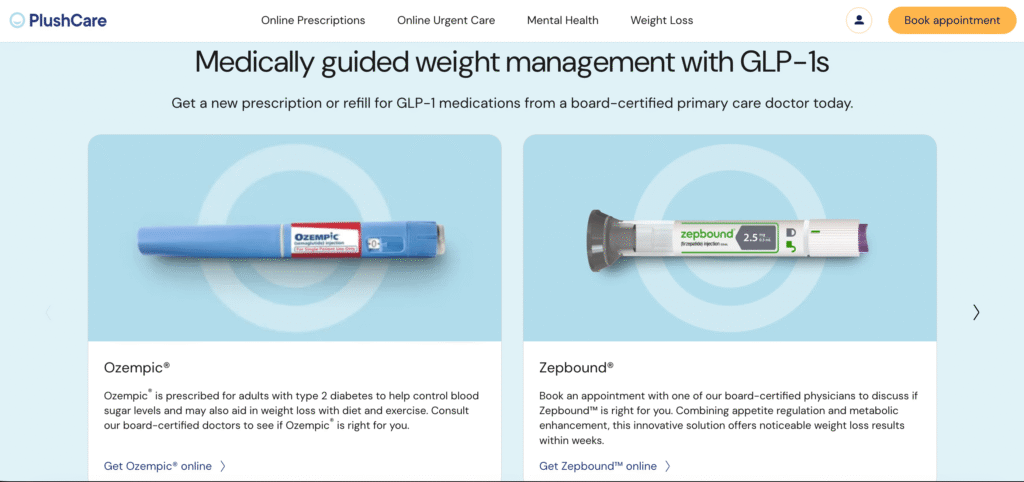
PlushCare is a unique platform that connects patients with primary care physicians via telehealth visits.
Their care is not menopause-specific, but it allows patients to use insurance and receive prescriptions for HRT, including estradiol when needed.
Key Specifications
- Telehealth with prescription: Yes
- Accepts insurance: Yes
- Medications available: Estrogen, progesterone
- Lab testing: Provider-dependent
Pros and Cons
✅ Pros
- Insurance accepted
- Access to licensed physicians
- Established telehealth platform
❌ Cons
- Not menopause-focused
- May require requesting patches specifically
How It Works
Patients schedule a telehealth visit with a care provider. After evaluation, prescriptions are sent to a local pharmacy for pickup.
Insurance
PlushCare accepts most insurance plans. However, coverage depends on your location and health plan provider. They typically permit patients to also use their own pharmacy. Coverage, copays, and prior authorization requirements depend on your insurer.
Clinical Oversight
Licensed physicians provide care with an option for ongoing follow-up visits and monitoring.
The Fine Print
PlushCare is not a menopause-specific platform. So, patients may need to request estradiol patches directly.
6. Evernow – Best for Ongoing Support
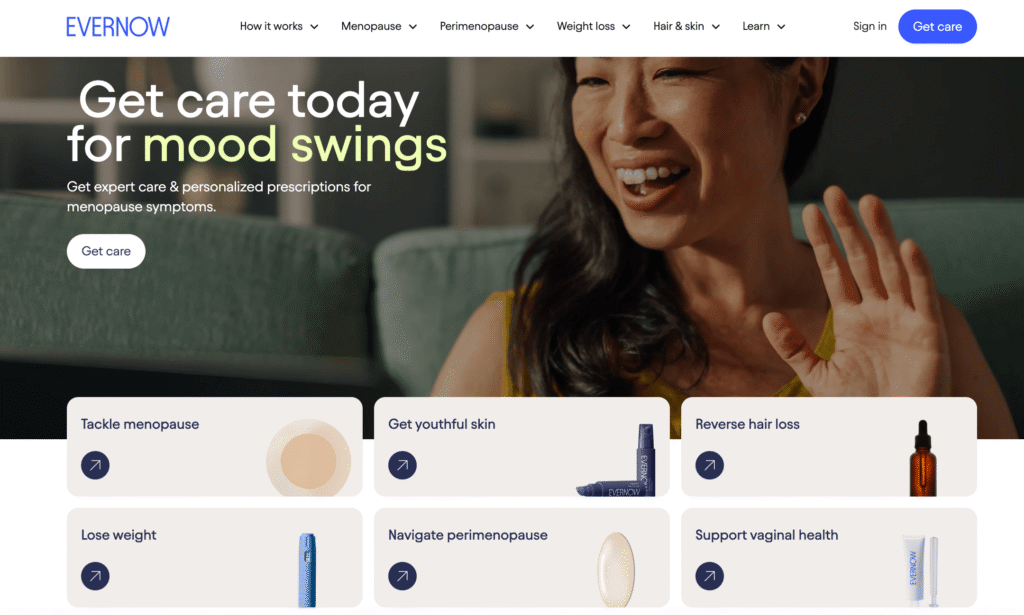
Evernow brings the focus back to menopause in their telehealth platform. They offer prescription care, ongoing support and flexible treatment plans. Unlike other subscription-only models, it now allows patients to choose among different care tiers based on the level of support they want.
You also have access to licensed clinicians who can prescribe HRT, including estradiol patches. They also offer ongoing messaging for symptom management and adjustments. Some plans even cover visits with insurance, which can help reduce out-of-pocket costs.
Key Specifications
- Telehealth with prescription: Yes
- Accepts insurance: Sometimes (visits)
- Medications available: Estrogen, progesterone
- Lab testing: Not always required
Pros and Cons
✅ Pros
- Flexible plan structure
- Ongoing clinician messaging
- Menopause-focused care
❌ Cons
- Medication costs may vary.
- Not always the cheapest option
How It Works
Patients complete an online intake form and select a care plan. A clinician then reviews symptoms and treatment goals before prescribing medications.
Insurance
Medications are typically cash-pay, but visits may be covered by insurance.
Clinical Oversight
Care includes ongoing support by licensed clinicians with symptom-based treatment adjustments.
The Fine Print
Medication costs can vary depending on the plan selected. Also, not all services are bundled into a single monthly fee. Some plans bundle care with messaging, but labs and meds may still be separate. Insurance can cover provider visits, but prescriptions are often cash-pay.
7. Wisp – Fastest Prescription
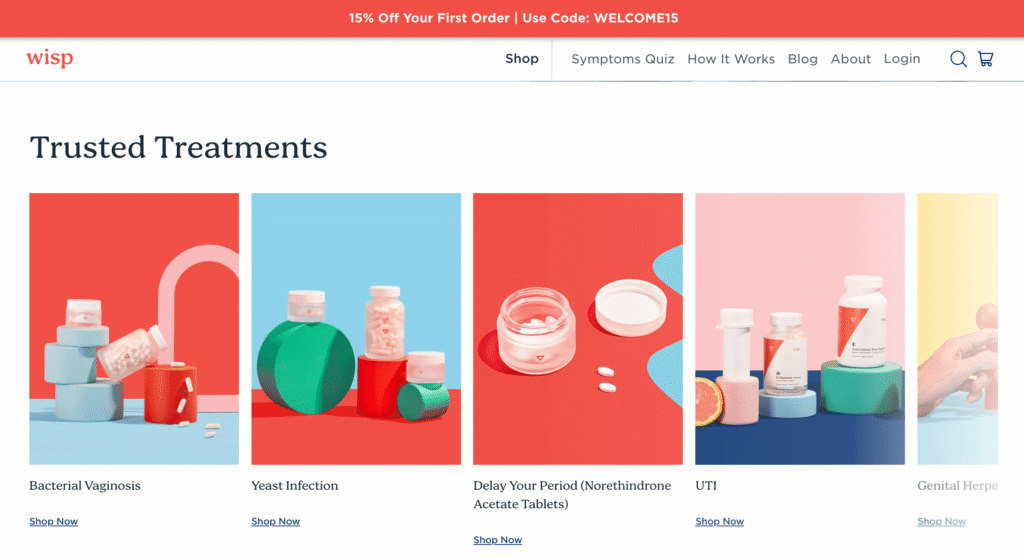
Wisp is an HRT provider that offers a faster and more streamlined approach to telehealth prescribing.
Patients begin by completing an online questionnaire. Then prescriptions are issued quickly without requiring a video visit. This makes it one of the faster ways to access HRT on our list, although clinical oversight may be more limited.
Key Specifications
- Telehealth with prescription: Yes
- Accepts insurance: No
- Medications available: Estrogen therapy
- Lab testing: Not always required
Pros and Cons
✅ Pros
- Fast access to prescriptions
- No video visits required
- Simple onboarding
❌ Cons
- Limited long-term care support
- May not automatically include progesterone
How It Works
Patients complete a short online questionnaire. A provider reviews the information, and prescriptions are issued quickly without requiring a live visit in most cases.
Insurance
Wisp is a self-pay platform that doesn’t accept insurance. Pricing is typically per visit with medications billed separately. Also, progesterone is not included and can come with additional costs.
Clinical Oversight
Clinicians review lab results and symptoms when prescribing HRT, which allows quicker access.
The Fine Print
Lab testing isn’t always required. Wisp may not automatically include progesterone when needed for those who need the additional prescription.
8. Pandia Health — Best for Reliable Prescription Delivery
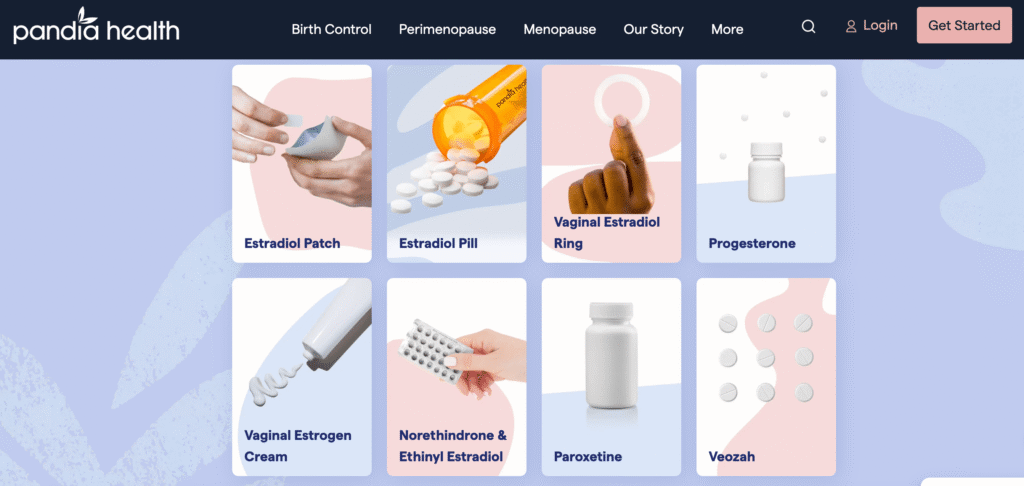
Founded by women, Pandia Health offers hormone therapy alongside reproductive health services on their telehealth platform. One of their biggest advantages is consistent medication delivery through auto-refills, which can help during ongoing patch shortages.
Their patients work with licensed clinicians, and they accept insurance. Both make it a practical option for patients seeking affordability and convenience.
Key Specifications
- Telehealth with prescription: Yes
- Accepts insurance: Yes
- Medications available: Estrogen, progesterone
- Lab testing: Provider-dependent
Pros and Cons
✅ Pros
- Free delivery with auto-refills
- Insurance accepted
- Reliable medication access
❌ Cons
- Not menopause-exclusive
- Less specialized care than niche platforms
How It Works
Patients complete an online consultation and work with a provider to receive a prescription. Medications are then shipped directly with automatic refill options.
Insurance
Pandia Health accepts some insurance plans, but coverage depends on the provider. They may also assist with coordination, but coverage varies.
Clinical Oversight
Care is provided by licensed clinicians that offer ongoing prescription management and refill coordination.
The Fine Print
The platform is not exclusively focused on menopause care and that may limit more specialized support. They also offer direct delivery, which can bypass local pharmacy shortages.
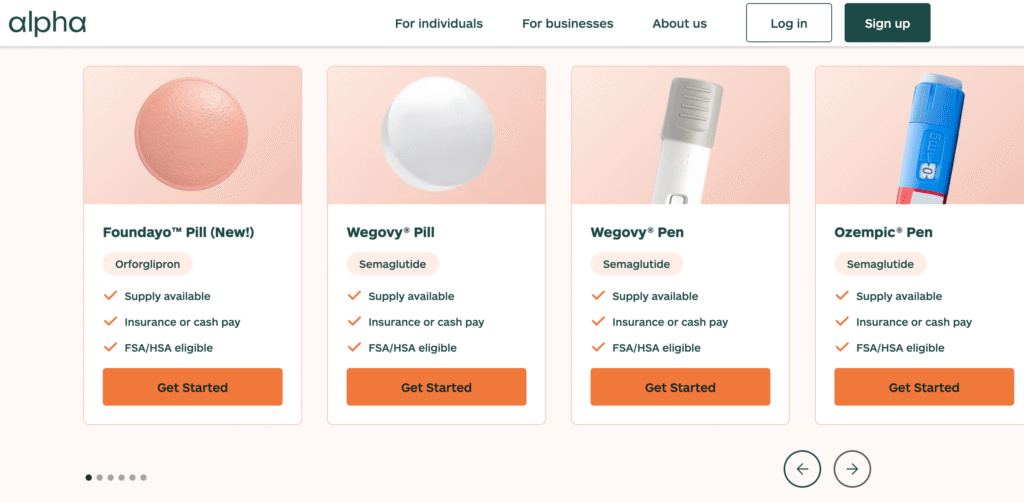
9. Everlywell/Hello Alpha — Best Budget-Friendly Telehealth Access
Hello Alpha is similar to Everlywell, as both offer lab services. However, Hello Alpha offers a more general telehealth model that includes menopause care and hormone therapy.
This platform is typically more affordable and accessible than menopause-specific platforms. Patients can also receive prescriptions online with their medications directly to their homes. We like that the platform offers ongoing messaging with providers and additional services, such as pelvic health support.
Key Specifications
- Telehealth with prescription: Yes
- Accepts insurance: Sometimes
- Medications available: Estrogen, progesterone
- Lab testing: Optional
Pros and Cons
✅ Pros
- Lower-cost entry point
- Broad care services
- Direct medication shipping
❌ Cons
- Not menopause-specific
- Less specialized hormone expertise
How It Works
Patients complete an online visit or messaging-based consultation. A provider reviews the information and prescribes treatment, with medications shipped directly when applicable.
Insurance
Many plans are cash-pay structured, but some services accept insurance payments. They may also be eligible for HSA/FSA use with certain visits covered. Medication costs are often separate.
Clinical Oversight
Hello Alpha provides care through a messaging-based model. Providers are available for follow-up questions and adjustments.
The Fine Print
Hormone therapy isn’t as specialized as some other menopause-focused providers.
How Much Do HRT Patches Cost in 2026?
Insurance is a major factor in costs. It also matters how the provider structures its services.
Typical pricing trends include:
- ~$100-$200 per month for cash-only telehealth programs, but this number can change depending on what’s included
- Med costs (estradiol patches) may or may not be included in the monthly price
- Progesterone is a separate cost or can add ~$10-$40/month depending on the prescription
- Lab tests are sometimes required and can cost from ~$50-$200 if not covered by insurance
- Shipping is typically included for the direct-delivery platforms, but it’s not always clearly stated
Using insurance impacts the costs mostly when:
- The telehealth visit itself is covered
- The prescription is filled through your insurance-preferred pharmacy vs. a partner pharmacy
- Copays and deductible status
That’s why the “real” monthly cost can vary quite a bit depending on how the platform structures their care and services.
What Estradiol Patches Cost Without Insurance
If you are paying cash, the generic is where almost everyone should start. Generic estradiol transdermal patches have been on the market for years. A month’s supply, which is usually eight patches changed twice a week, tends to land somewhere in the $25 to $75 range at a retail pharmacy when you use a discount card. Walk in without one and the same box can ring up at two or three times that.
Brand names are a different story. Climara, Vivelle-Dot, Minivelle, and Dotti still carry brand pricing, and cash prices in the low hundreds per month are common. If your prescription was written for a brand and you are paying out of pocket, ask your prescriber whether the generic will work for you. Most of the time it will.
Two things move the number more than people expect. The first is which pharmacy you use. The same prescription can be quoted at very different prices at two stores a few miles apart, so it is worth calling three or four before you fill. The second is dose, or rather the fact that dose usually does not matter. Patches come in 0.025, 0.0375, 0.05, 0.075, and 0.1 mg/day strengths, and cash pricing is typically flat across them, so a dose change rarely changes what you pay.
What Estradiol Patches Cost With Insurance
Most commercial plans and most Medicare Part D plans put generic estradiol patches on a low generic tier. In practice that usually means a copay somewhere between $0 and $30 for a 30-day supply. Switching to a 90-day fill through mail order often brings the per-month cost down again.
Brand-name patches are frequently non-preferred or require prior authorization. If your pharmacy tells you a brand is not covered, the fix is usually a switch to the generic rather than an appeal.
One thing catches a lot of people off guard: the telehealth platform fee is almost never covered, even when the medication itself is. Your real monthly total is the drug plus whatever the platform charges to see you and keep prescribing.
What a Full Month Actually Costs
| Line item | Paying cash | Using insurance |
|---|---|---|
| Generic estradiol patches (1 month) | About $25 to $75 with a discount card | About $0 to $30 copay |
| Brand patch (Climara, Vivelle-Dot, Minivelle) | Often $100 to $300+ | Varies; often needs prior authorization |
| Progesterone, if you still have a uterus | About $10 to $40 | About $0 to $15 copay |
| Telehealth visit or membership | About $25 to $100 | Rarely covered |
| Baseline labs, when required | About $50 to $200 | Often covered |
These are planning ranges, not quotes. What you pay moves with your pharmacy, your ZIP code, your plan’s formulary, and whether the platform bundles medication into its monthly fee. Confirm the number with the pharmacy before you fill.
Choosing the Best HRT Patch Provider
Choosing the best HRT patch provider depends on what matters most to you.
Using a platform that accepts insurance is likely the best option when you want to minimize cost. If access is your concern, especially during the current shortage, look for a provider that ships medications directly, as they may offer more reliable results.
Another thing to consider is services. Would you prefer a simple prescription service or do you desire more ongoing menopause care with clinician support?
Regardless of the platform you choose, hormone therapy should always involve licensed providers, appropriate thorough screening and prescriptions filled through regulated and trusted pharmacies.
Safety and Risks of HRT Patches
HRT is an effective treatment for menopause, but it’s not the right option for everyone. Before starting any medication or treatment plan, it’s important to understand the potential risks and benefits.
Who Should Not Use HRT Patches
HRT may not be recommended if you have a health history of (6):
- Heart disease
- Stroke
- Blood clots
- Breast cancer
- Gallbladder disease
- Endometrial cancer
- Liver disease
If any of these apply to you, your healthcare provider can help determine safer treatment alternatives.
Understanding the Risks
HRT carries some health risks depending upon your age, health history, and length of therapy.
Breast Cancer Risk
Taking a combination of estrogen and progesterone therapy may increase your risk of breast cancer with long-term use (7).
Estrogen-Only Therapy
Estrogen-only therapy does not carry the same increased breast cancer risk.
Blood Clots
Transdermal patches carry a lower risk of blood clots compared to oral estrogen. That’s why patches are sometimes preferred.
Timing Matters
Experts suggest starting HRT (8):
- Within 10 years of menopause
- Or before the age of 60
This treatment window is associated with a more favorable benefit-risk profile.
Common Side Effects
Side effects are naturally expected when starting HRT, but often improve over time:
- Breast tenderness
- Headaches
- Nausea
- Skin irritation at patch site
As your body adjusts to the medication, you will likely start to see the symptoms settle.
Ongoing Monitoring
Hormone therapy requires ongoing monitoring and consistent follow-ups with your healthcare provider to:
- Monitor and adjust dosing as needed
- Track symptom changes and improvement
- Reassess your overall risk over time
Frequently Asked Questions (FAQs)
What are HRT patches and how do they work?
HRT patches are hormone replacement therapy patches that deliver estradiol through the skin and into the bloodstream. They help regulate hormone levels and manage menopause symptoms. Patches help maintain more stable hormone levels compared to oral medications and are commonly used to treat symptoms such as hot flashes and night sweats.
Are estrogen patches better than pills?
Estrogen patches are not necessarily better than oral pills. For many women, patches are preferred since they provide steady hormone levels and carry a lower risk for blood clots. The best option really depends on your symptoms, medical history, and personal preference. Gels and pills may be an appropriate alternative in some cases.
How much do estradiol patches cost without insurance?
Estradiol patches typically cost between $60 and $150 per month. However, price depends on the brand, dosage, and provider. Telehealth platforms sometimes charge additional fees for consultations, labs, or monthly membership plans.
Can I buy HRT patches online?
Yes, many telehealth providers offer estradiol patches after an online consultation. You can expect to complete an intake questionnaire, schedule a virtual provider visit, or provide lab results before treatment is approved.
Why are estrogen patches in short supply?
The demand for the medication has increased significantly in recent years. Manufacturers have struggled to keep up with that demand.
Do I need progesterone with estrogen patches?
If you’re living with your uterus, yes. Progesterone helps protect the uterine lining (5). It also helps reduce the risk of complications associated with estrogen-only therapy.
What is the difference between Vivelle-Dot, Climara, and generic estradiol patches?
The differences come down to how often they’re applied and the formulation. Climara is applied once weekly, while the others are applied twice weekly. All deliver estradiol through the skin, but their availability and dosing may vary.
How long does it take for HRT patches to work?
Many women start to feel improvements in symptoms like hot flashes and sleep within a few weeks. It may take up to 2-3 months to experience the full impact as your body adjusts to the therapy.
Are HRT patch programs covered by HSA or FSA?
Some telehealth visits and prescription costs may be eligible for HSA/FSA reimbursement since they’re prescribed by a licensed provider. However, eligibility depends on the platform and your coverage plan.
References
- https://www.fda.gov/consumers/consumer-updates/hormone-replacement-therapies-can-help-women-bothersome-menopausal-symptoms
- https://www.mdpi.com/1422-0067/26/22/11098
- https://www.epicresearch.org/articles/blood-clot-risk-influenced-by-hormone-therapy-administration-route-in-women-50-and-older
- https://www.npr.org/2026/03/10/nx-s1-5742817/menopause-hormone-therapy-shortages
- https://journals.sagepub.com/doi/10.1177/20533691211058030
- https://www.mayoclinic.org/diseases-conditions/menopause/in-depth/hormone-therapy/art-20046372#:~:text=Age.,benefits%20may%20outweigh%20the%20risks.
- https://www.breastcancer.org/risk/risk-factors/using-hormone-replacement-therapy